Tag: Government

  • Downsville Demons — Part 2

    Sheriff Gates Stands by Investigation as Allegations Surface at Downsville Charter

    Union Parish Sheriff Dusty Gates says he stands by the work of his investigators following a recent case connected to Downsville Community Charter School.

    In a recent meeting, Sheriff Gates told me that his investigators conducted a thorough investigation into the matter and handled it appropriately. Gates also stated that he personally disagrees with the District Attorney’s decision in the case but continues to support the work carried out by his department.

    The case has drawn increased attention to the school and its leadership, prompting a number of parents, former students, and community members to reach out with their own concerns regarding Downsville Community Charter School and its Executive Director, Tony Cain.

    Over the past several months, numerous individuals have contacted me describing their experiences at the school. The concerns shared fall into several general categories, including discipline practices, handling of bullying complaints, student search procedures, treatment of students with IEPs and 504 plans, and communication with parents during disciplinary matters.

    Some individuals also described incidents they believe involved extreme, inappropriate and excessive discipline or force, while others reported concerns about how complaints were handled by school administration. At this stage, these accounts remain allegations shared by individuals who reached out directly.

    I have spoken with Mr. Cain regarding these concerns and provided him with the general areas of inquiry. Mr. Cain provided a written response addressing school policies related to discipline, bullying procedures, student searches, and school governance. His full response will be published in Part Three so readers can review his explanation in full.

    In addition to gathering accounts from parents and former students, public records requests have been submitted to the Louisiana Department of Education seeking documentation related to governance records, board actions, contract renewals, and bylaw amendments at the school as I have concerns about the way the school has been structured.

    This article is Part Two of an ongoing review. Future reporting will focus on documented records, school policies, and responses from school leadership.

    My opinion:
    I have reviewed over twenty-five accounts of serious allegations against Mr. Cain. I am personally very concerned about the criminal charges being dropped, the case being silenced and the allegations continuing thereafter. I have reviewed the evidence in the case, and while I am not a lawyer, I find myself very concerned at the decision to not move forward through the proper legal channels on this matter.

    I will be reaching out to the DA/Judge’s office to request a meeting to discuss these concerns. When a Sheriff’s office feels confident in their work and investigation and are left with the same concerns as the citizens, that indicates a lack of transparency somewhere along the line.

    Anyone with documentation related to these matters may contact me privately at [email protected].
  • Downsville Demons — Part 1

    Serious Concerns Raised About Downsville Charter School

    I’ve received multiple messages from parents raising serious concerns about Downsville Charter School, including allegations of excessive corporal punishment, dismissed bullying complaints, and administrative responses they say have harmed students.

    Parents allege that when students report bullying, they are often told they are “tattling,” dismissed, or instructed to be quiet. When parents attempt to advocate for their children, they say concerns are deflected or placed back on the child. Several families describe a pattern in which unresolved bullying escalates until a child reacts, resulting in disciplinary action against the student rather than addressing the original complaint. Some parents also allege the school has been quick to suggest having children admitted for evaluation instead of addressing underlying issues.

    One of the most serious accounts shared with me involves an 11-year-old student with a Section 504 designation. According to my source, the student was removed from class following activity on a school computer and taken to the office by staff identified as Tony Cain and another staff member referred to as Mr. Bean. The parent alleges Mr. Cain authorized and carried out corporal punishment using a plastic paddle, resulting in broken skin and severe bruising. Photos provided to me appear to show extensive bruising. Corporal punishment of students with Section 504 protections is prohibited under state and federal law.

    According to the account, the Union Parish Sheriff’s Department investigated the incident and confiscated the paddle. No criminal charges have been filed at this time. Following the incident, the school board reportedly implemented a policy prohibiting corporal punishment.

    This is an ongoing story. I did reach out to the school for an interview, but as of the date of this publication have not yet received an official response.

    If you are a parent, student, or staff member with relevant information or experiences involving Downsville Charter School and would like to share them, you can contact me privately. Information can be shared safely and anonymously, and identities will not be published without consent.

    I will continue to update as more information becomes available.

  • My-Home Studio Apartments — Pricing Questions

    Location: Monroe, LA

    This property was redeveloped and publicly promoted as affordable workforce housing, with rents discussed in the $800-$1,000 range.

    Now I’m seeing one-bedroom units advertised at $2,500 for a very basic 1 bed/1 bath.

    I’ve tried to get clarification — called the number listed with no response, messaged through Facebook with no response so far.

    I actually met with Sam Datta, the owner, shortly after his purchase of this property. I took a tour of the property with him and listened to his pitch for affordability in the area. He did not mention market-rate rentals at that time and insisted this was for people who needed affordable housing. He even confessed to me in our one-on-one that he chose this location specifically because it could only rent at affordable prices due to the area it is in and the history of the building. He also told me that part of the motivation in choosing that location was due to the Ochsner Cancer center that’s coming to Monroe. He mentioned wanting to have affordable housing for both the staff and potential patients who would need to live closer to their treatment center. Now it appears he is marketing more towards the incoming Meta employees.

    If this pricing is accurate, the community deserves to know what changed. If it isn’t, then clarity matters just as much.

    Affordable housing isn’t just a buzzword — it affects real families, real workers, and our local economy.

    Update: Productive Conversation with Management

    I had a really productive conversation today with a representative of a local apartment complex I’ve been covering concerning rental prices at My-Home at Monroe. We discussed the community’s concerns about affordability, and I appreciated how openly and thoughtfully he listened.

    As a result of our conversation, he shared that he’s actively working toward potentially adjusting rental prices to better serve the community. Because of that, he asked to pause outside coverage so this process can unfold.

    I would like to share that I was very impressed with management’s professional approach to having conversation about real issues.

    I’m hopeful to have an update by the end of the week. Thank you to everyone who reached out and trusted me to bring your concerns forward — this is exactly how constructive dialogue should work. I will say the property has come a long way since my last tour two years ago. There has been a lot of construction and upgrades made. I’m excited to share more with you this week after further discussion with the owner.

    Part Two: Follow-Up with Sam Datta

    Sam Datta, owner of My Home at Monroe, met with me today to discuss concerns raised by locals who were surprised to see units advertised at prices significantly higher than originally expected. Datta said the project was approved through zoning as a mixed housing development, with 80% designated as workforce housing and 20% intended to meet affordable housing standards.

    According to Datta, several factors influenced the current pricing structure, including changes in the regional housing market and a growing shortage of short-term housing for incoming contract workers. He said an influx of implanted and temporary workers has led many to live in hotels due to limited availability of furnished apartments.

    Datta said they have decided to price their available units at $1,500, all utilities paid and completely furnished, noting that this only includes the 50 ready units. “Currently people in the workforce are paying $110-250 a night for housing,” Datta explained. “We conducted market surveys and, based on those findings, invested more into the property than we originally planned to meet the locals’ needs.”

    My Home at Monroe is offering gated access, on-site security with a live-in courtesy officer, indoor and outdoor pool access, and many more future amenities planned for Phase 2 of the project. Datta said those additions may include a restaurant, retail spaces, potential conference or office areas, and on-site laundry facilities, though some elements are still in discussion.

    Despite the higher-end amenities, Datta emphasized that his intent is not to price out local residents. “We don’t want to price gouge,” he said. “Our goal is to offer a nice project at a reasonable price, so residents can use the balance of their money for food, entertainment, and supporting businesses in this area.”

    Datta also noted that much of the temporary housing currently used by contractors is located outside of Monroe, meaning a significant portion of that economic activity is leaving the community. “A lot of temporary housing is being provided further out of town,” he said. “That’s money being spent elsewhere. Our goal is to improve this area and meet the immediate needs of contractors coming in.”

    According to Datta, city leadership — including the mayor and city council — has expressed the need for housing options that can accommodate the growing number of temporary workers tied to regional projects. While many of those workers may only be in the area short-term, Datta said their presence still represents income and economic opportunity for the community. He expressed to me that they are still early on in development stages, and while they are offering units for lease right now, the full property is not ready for lease up. Once the temporary workers move on to the next project, he sees his luxury complex will be at a point where locals will reap the benefits.

    As the project continues toward completion, Datta said he anticipates being better positioned to offer a finished product that more directly serves local residents and aligns more closely with affordability expectations.

    Following discussions about community feedback and rental concerns, Datta shared that he is actively exploring ways to adjust pricing moving forward, with the goal of better balancing market demands and community accessibility.

    This story is ongoing, and further updates are expected as those decisions are finalized.

  • Local Rescue Raises Alarm Over Deadly Cat Virus at Shelter

    In an exclusive interview, a West Monroe cat rescue owner is speaking out after losing dozens of kittens to panleukopenia, a highly contagious and often fatal cat virus. She says the local shelter did not disclose that some cats were exposed, and several kittens she rescued died despite strict care.

    She also warns that members of the public adopting cats from the shelter could unknowingly bring home the virus, putting their families and pets at risk. Rescue operators say multiple kittens have died this year under similar circumstances, and the outbreak may have been kept quiet.

    At the time of publication the Ouachita Parish Animal Shelter was unavailable for comment. I will continue to reach out for a statement. This story is ongoing.

  • Forsythe Park Update & The Bigger Picture

    After speaking with several families who raised safety concerns about Forsythe Park, I had the opportunity to sit down with Hillary Sirmon, the organizer behind the inclusive playground vision for the park.

    Hillary shared that her passion for inclusive play spaces began with her own child with special needs. She has helped fundraise and plan multiple park projects before, and her mission has always been simple: create spaces where all children, regardless of ability, can play together.

    Forsythe Park is part of the City of Monroe’s broader Parks & Recreation Master Plan — a long-term strategy approved by City Council to revitalize parks across the city. The plan includes upgrades, expanded recreational amenities, and improvements intended to make parks more functional and welcoming for families.

    However, Hillary explained that the Forsythe project is still approximately $25,000 short of full completion.

    Forsythe Park has the potential to be one of Monroe’s most beautiful and inclusive gathering spaces. The goal now is ensuring that it is not only accessible — but safe.

    Donations for the nonprofit raising money for this project can be made at:
    John Clarke Perry Foundation on Venmo

  • Growing Safety Concerns at Forsythe Park

    Location: Monroe, LA

    Forsythe Park has long been a cherished space in Monroe — a place where families gather, children play, and the community comes together. But growing safety concerns are causing some parents to think twice before bringing their children there.

    Local residents report multiple hazards throughout the park’s play areas, including unstable and fading slides, loose and deteriorating guard rails, and connective bridges designed for children that lack any guard rails at all. Parents have also pointed out uneven ground and patchwork repairs that appear worn and unsafe.

    One mother shared a particularly alarming experience, saying she had to physically move her child off a platform after noticing he was about to fall through what appeared to be rotten wood. “Our kids deserve better,” she said. “Why isn’t Monroe addressing this?”

    While Forsythe Park remains full of potential, these safety issues are raising serious concerns among families. Parents say the park should be a place of peace and play, not constant vigilance and fear of injury.

    Many are now calling on the City of Monroe to inspect the park, address the reported hazards, and prioritize repairs to ensure the space is safe for the children it was built to serve. Until then, some families say they’re staying away, hoping that attention and action will restore Forsythe Park to the welcoming community space it once was.

    I would love the opportunity to meet with Mayor Friday Ellis to discuss these concerns and how we can create a fun, safe environment for the community to come together.

    Update from Mayor Ellis:

    “The playground is about to be demolished and a new playground/family area will be in place. Should be about 2-3 months before construction begins. Shoutout to Miracles to Milestone for spearheading and fundraising for the new playground.

    Those rails consistently are an issue. Thanks for the heads up. I’ll send our folk out to brace them up.”

  • Meeting With the Mayor: A Conversation on Transparency

    Meeting With the Mayor: A Conversation on Transparency

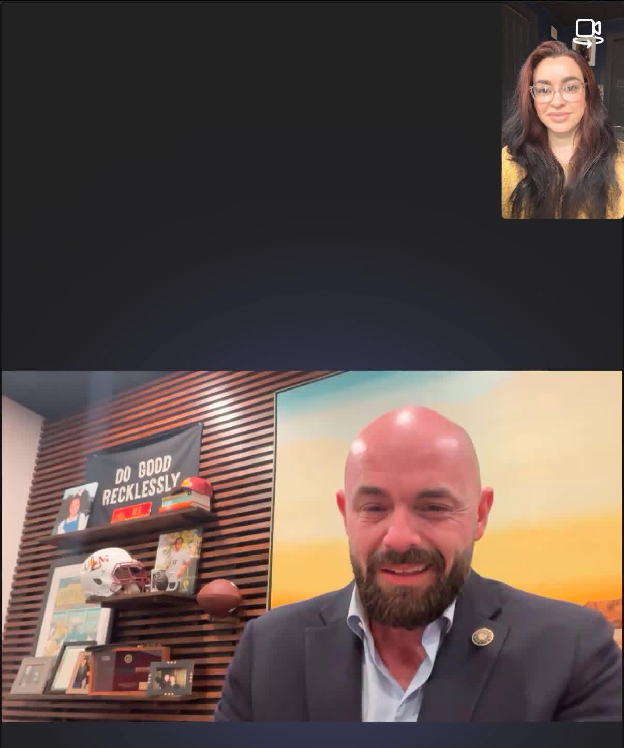
    I met with Mayor Friday Ellis today to discuss transparency, public communication, and how information moves between the city and its residents. While he originally opened his office to me, I decided on a video chat due to potential inclement weather. We started on a light note — the irony of my first meeting Mayor Friday on a Friday wasn’t lost on either of us — before moving into more substantive discussion.

    In his office hangs a sign that reads, “Do good recklessly,” a phrase that stuck with me throughout our conversation as I listened to his approach on politics.

    The mayor emphasized that his approach to leadership is rooted in efficiency and governance rather than popularity. He shared that he understands not every decision will be well received, but his focus remains on what he believes best serves the community, even when that isn’t immediately clear to the public.

    Transparency was the central theme of our conversation. He did not shy away from the topic and was ready to address it head on. Mayor Ellis explained that the city operates within a system of checks and balances designed to prevent misuse of power, but that structure can also mean he isn’t always directly aware of every concern as it arises. He asked for the benefit of the doubt from the public while acknowledging the importance of transparency and communication.

    We discussed how grants, budgeting and fund allocation are often confusing for residents despite being public record. He shared that the city is actively working to simplify its website to make information more accessible and easier to understand.

    As an independent journalist, I was offered a line of communication with the mayor’s office to help clarify concerns more efficiently when questions arise. He expressed openness to transparency and a willingness to engage in ongoing dialogue, something that I believe is a great demonstration of dedication to transparency.

    The public can expect me to continue reporting on city matters as they arise — asking questions, seeking clarification, and sharing information as accurately and neutrally as possible.

    I would like to thank the Mayor for meeting with me and dedicating himself to further conversations and transparency. One thing we can all agree on is that we can’t all agree. But we can move forward together with progressive conversations, grounded in accountability and transparency.

    CAN Report Image

  • Ouachita Parish Fire Department — Chief Robert Moore Interview

    In a sit-down interview, Robert Moore, Fire Chief of the Ouachita Parish Fire Department, said the department’s mission is simple: to serve the public and meet community needs.

    “We’re here to help,” Moore said. “I just don’t think people realize everything we do.”

    Many residents only interact with the fire department during emergencies, but Chief Moore says the department provides far more services than most people realize. He has served with the department for nearly 15 years and brings more than 35 years of public safety experience to the role.

    Ouachita Parish operates as one unified fire district, covering nearly the entire parish outside of Monroe and West Monroe. Unlike many areas in Louisiana that rely on small volunteer districts, Ouachita Parish runs as a coordinated system with 15 fire stations, with a 16th station planned along Highway 80 near Trapp Field, currently projected for 2028.

    While fire suppression is a core responsibility, about 80% of calls are medical. Many firefighters are paramedic-certified and provide advanced life support, often arriving before ambulance services. The department is also the only local agency with mechanical CPR devices on every frontline truck, allowing consistent chest compressions during cardiac arrest and transport — a critical factor in survival, especially in rural areas.

    Despite covering more than 600 square miles, the department holds a Class 3 fire rating, considered exceptional for a district of this size and one that can positively affect insurance rates. Moore says the department plans years in advance for major purchases like fire engines, ladder trucks, and stations, allowing them to operate without debt or bonds and stay within budget.

    The department also offers several free services many residents don’t know about, including free smoke alarm installation, fire safety education in schools, CPR and first responder medical training, fire protection reviews for new subdivisions, and assistance with gas or carbon monoxide concerns. If a request falls outside their jurisdiction, staff help connect residents with the appropriate agency.

    Ouachita Parish Fire Department maintains an Urban Search and Rescue team and is part of a regional response network activated through the Louisiana State Fire Marshal. Local firefighters have deployed to floods, hurricanes, and other disasters both in Louisiana and out of state. The department is also trained and equipped for high-angle rescue, confined space rescue, and water rescue, with all equipment and training maintained in-house.

    While life-threatening emergencies take priority, firefighters also respond to animal rescue calls when needed, including animals trapped in vehicles, trailers, or dangerous situations. In many cases, animal control or law enforcement requests assistance due to the specialized equipment required.

    The department employs approximately 190 personnel, including firefighters, dispatchers, training staff, and maintenance crews. On any given day, at least 46 firefighters are on duty, working 24-hour shifts. The department operates its own in-house fire academy, which lasts about a year and includes EMT certification and fire suppression training. The department is currently hiring and expects to bring on around 15 new firefighters this year.

    Those interested can learn more at:
    – ouachitafire.org
    – 318-325-1621
    – Facebook

  • Taking the Lock Off City Hall — Don Nance Interview

    (TLDR at end)

    Today I sat down to interview Mr. Nance at his local business in West Monroe. His message was clear: not just access to information, but access to leadership.

    Nance, who previously worked for the City of West Monroe for 13 years under prior leadership, says his decision to run is rooted in what he believes has been lost in recent years. He points to transparency, financial discipline, and an open relationship with the people as central concerns.

    And he framed it in a way that was hard to ignore.

    “When the current mayor ran, she talked about transparency and an open-door policy,” Nance said. “The first thing she did was put a lock on the elevator at City Hall so you can’t access the second floor.”

    His promise?

    “I will literally and figuratively take the lock off.”

    A Focus on Financial Reality

    Nance does not shy away from discussing the city’s finances. He repeatedly pointed to what he describes as a growing debt burden, citing approximately $42 million in debt, along with long-term bond payments tied to projects like the West Monroe Sports Complex.

    According to Nance, the issue is not whether amenities are nice to have. It is whether they are sustainable.

    He expressed concern about multiple city-owned event venues operating at a loss. His solution is not to abandon them, but to manage them differently.

    “If it’s going to survive without draining tax dollars,” he explained, “it has to be booked constantly. You can’t rely only on local youth leagues. You have to bring in outside events.”

    Rather than pointing fingers, Nance says his approach would be practical. He wants to run the city the way he runs his own businesses, with financial restraint, long-term planning, and clear priorities.

    “There’s a time to eat beans, and there’s a time to eat steak,” he said. “Right now, we need to be asking, does this make us safer? Does this fix our water? Does this improve our streets? If not, it moves down the list.”

    Clean Water: A Long-Term Commitment

    Water infrastructure is another major pillar of Nance’s campaign.

    He was careful not to promise overnight fixes. West Monroe’s water system pulls from multiple sources, which makes filtration upgrades complex and expensive.

    “It’s not a day-one solution,” he said. “If it was easy, it would already be fixed.”

    However, he believes the city should aggressively pursue available federal infrastructure funding that is specifically earmarked for water improvements.

    His stance is simple. If grant money exists for clean water, it should be pursued just as aggressively as funds for other projects.

    Public Safety and Protecting Children

    Nance also emphasized safety, particularly when it comes to theft and school security.

    He described personal experiences with property theft and advocates for increased night patrols in neighborhoods. One of his strongest positions was clear.

    He wants a police officer in every school within city limits.

    “We can make cuts in other areas,” he said. “But what’s more important than our children?”

    Beyond policing, Nance talked about building unity across pastors, coaches, teachers, parents, law enforcement, and community members to mentor young people before problems begin.

    “This isn’t about national political debates,” he said. “It’s about running a city. It’s about unity.”

    Supporting First Responders

    Another issue he raised was employee benefits for police officers and firefighters.

    Nance believes it is unacceptable for first responders to risk their lives while struggling to afford family health insurance.

    “If someone is willing to protect this city, we should protect them,” he said.

    He indicated he would prioritize reviewing and strengthening those benefits if elected.

    Involving the Citizens in Decision-Making

    Perhaps the most consistent message of the conversation was inclusion.

    Nance repeatedly emphasized that major city decisions should not happen in isolation.

    “When the council meets and we’re deciding what to spend money on, I want citizens involved,” he said. “They know their neighborhoods. They know their problems.”

    He described canvassing neighborhoods personally and hearing directly from residents who felt unheard.

    He says transparency is not just about publishing numbers. It is about accessibility. It is about answering the phone. It is about meeting face to face. It is about removing barriers, both physical and symbolic.

    A Commitment to Accountability

    At the close of our conversation, I asked Nance directly whether he would commit to transparency and accountability with me as an independent journalist, even if criticism arises.

    His response was immediate.

    “100 percent yes.”

    Whether voters agree with every position or not, Nance’s campaign message is clear. Restore financial discipline. Prioritize core services. Strengthen public safety. And perhaps most notably, give the citizens a key to City Hall.

    In his words, it is time to take the lock off.

    TLDR: Taking the Lock Off City Hall

    Don Nance says he’s running for mayor of West Monroe to restore transparency, financial discipline, and public access to leadership. He believes the city is carrying significant debt and wants to prioritize core services like clean water, safer streets, and stronger support for police, fire, and schools before funding additional projects.

    He supports pursuing federal funding to address long-term water infrastructure issues, increasing neighborhood patrols, placing officers in every school, and reviewing benefits for first responders.

    Most importantly, he says he wants citizens directly involved in decision-making and promises to be accessible and accountable. In his words, he plans to “literally and figuratively take the lock off” City Hall.

  • Industrial Groundwork in Ouachita Parish?

    OPPJ — Public Records Review

    Over the past few weeks, I’ve been digging through Ouachita Parish public records. Looking at budgets, meeting minutes, audit reports, and capital outlay documents. I’m trying to better understand how parish tax dollars are being spent and what long-term plans may be underway.

    One pattern that stands out in the records is the parish’s repeated use of two categories: East Ouachita Economic Development Capital Outlay and West Ouachita Economic Development Capital Outlay. These funds appear throughout the financial documents and meeting minutes and are specifically tied to economic development spending.

    In plain terms, “capital outlay” usually refers to money used for large projects such as infrastructure, engineering work, planning, and development preparation. It is different from routine expenses like payroll or daily operations. Capital outlay funds are typically used when a government is investing in long-term projects.

    The documents show the parish approving funding connected to planning, engineering work, and infrastructure improvements under these economic development categories. While the records do not name a specific company or project, these types of expenditures are often associated with early-stage development planning.

    Another detail that appears consistently in the records is the geographic separation of spending between East Ouachita and West Ouachita. That type of distinction can sometimes indicate that development planning is being focused in particular areas of the parish rather than applied evenly everywhere.

    In many communities, the early phases of industrial or large-scale economic development follow a fairly predictable pattern:

    1. Engineering or feasibility studies are approved
    2. Infrastructure planning begins (roads, utilities, site preparation)
    3. Capital outlay funds are allocated
    4. Sites are prepared or certified for development
    5. A company announcement may happen later

    The documents reviewed so far appear to show activity that fits within the early stages of that process. However, the records themselves do not identify a specific industry, company, or project.

    Another interesting piece of the puzzle is that some of the investments appear tied to infrastructure and development planning that could support large projects requiring significant utilities, broadband access, or transportation access. Those types of investments are often made years before any official announcement is made.

    To be clear, this does not mean a specific industrial project or company has been confirmed. What the documents show is that the parish has been allocating funds and approving planning activity tied to economic development infrastructure.

    At this stage of the investigation, the goal is simply to understand what these funds are being used for and what long-term development plans may exist.

    I am still requesting types of documents that often provide more detail about whether a parish is preparing land for future industry or large employers.

    As always, I want to be clear that I am not an attorney and not claiming wrongdoing. My goal is simply to review public records and help make complex government documents easier for the community to understand.

    Public information helps everyone better understand how our local government is planning for the future. We deserve to be informed. As I look through the OPPJ meeting minutes, I haven’t found any public information on plans for industrial development but in my opinion, the financial records seem to indicate that is the direction they are heading. I wonder at what point a public announcement would be made?