Tag: Legal

  • Downsville Demons — Part 2

    Sheriff Gates Stands by Investigation as Allegations Surface at Downsville Charter

    Union Parish Sheriff Dusty Gates says he stands by the work of his investigators following a recent case connected to Downsville Community Charter School.

    In a recent meeting, Sheriff Gates told me that his investigators conducted a thorough investigation into the matter and handled it appropriately. Gates also stated that he personally disagrees with the District Attorney’s decision in the case but continues to support the work carried out by his department.

    The case has drawn increased attention to the school and its leadership, prompting a number of parents, former students, and community members to reach out with their own concerns regarding Downsville Community Charter School and its Executive Director, Tony Cain.

    Over the past several months, numerous individuals have contacted me describing their experiences at the school. The concerns shared fall into several general categories, including discipline practices, handling of bullying complaints, student search procedures, treatment of students with IEPs and 504 plans, and communication with parents during disciplinary matters.

    Some individuals also described incidents they believe involved extreme, inappropriate and excessive discipline or force, while others reported concerns about how complaints were handled by school administration. At this stage, these accounts remain allegations shared by individuals who reached out directly.

    I have spoken with Mr. Cain regarding these concerns and provided him with the general areas of inquiry. Mr. Cain provided a written response addressing school policies related to discipline, bullying procedures, student searches, and school governance. His full response will be published in Part Three so readers can review his explanation in full.

    In addition to gathering accounts from parents and former students, public records requests have been submitted to the Louisiana Department of Education seeking documentation related to governance records, board actions, contract renewals, and bylaw amendments at the school as I have concerns about the way the school has been structured.

    This article is Part Two of an ongoing review. Future reporting will focus on documented records, school policies, and responses from school leadership.

    My opinion:
    I have reviewed over twenty-five accounts of serious allegations against Mr. Cain. I am personally very concerned about the criminal charges being dropped, the case being silenced and the allegations continuing thereafter. I have reviewed the evidence in the case, and while I am not a lawyer, I find myself very concerned at the decision to not move forward through the proper legal channels on this matter.

    I will be reaching out to the DA/Judge’s office to request a meeting to discuss these concerns. When a Sheriff’s office feels confident in their work and investigation and are left with the same concerns as the citizens, that indicates a lack of transparency somewhere along the line.

    Anyone with documentation related to these matters may contact me privately at [email protected].

  • Ratty Business Deals — Pest Control Inspection Concerns

    A local couple is speaking out after what they describe as a troubling experience with a pest control inspection at their new home.

    The homeowners, who asked not to be publicly identified, said they initially scheduled a routine preventative spray service after moving into their home about a month ago. According to them, several hours before the scheduled appointment, a man identifying himself as Clay Ashbrook, a supervisor, called and offered to perform a complimentary attic inspection, stating the area was known for rat problems.

    The couple agreed.

    During the inspection, the employee allegedly told the homeowner that the attic contained dozens of rat nests and multiple litters of baby rats. Within minutes, they say he presented a quote of approximately $22,000 for insulation removal, rodent remediation, insulation replacement, and sealing gaps near roof ventilation. The proposal included financing options.

    The homeowners state they had not seen, heard, or smelled any signs of rodent activity in the month they had lived in the house.

    The situation raised additional concerns when the couple later learned the employee was not a supervisor, but a termite inspector. They allege he referenced their baby’s health during the inspection and used terms such as “hazardous waste removal.” They further claim that photographs included in the quote did not match their attic. According to the couple, they have photographic evidence comparing their attic to the images used in the estimate.

    After returning home, one of the homeowners says he personally inspected the entire attic and found no nests, rodents, or structural gaps consistent with what had been described.

    Since sharing their experience publicly, the couple says multiple individuals have contacted them with similar concerns about the same employee. Some commenters alleged that women and elderly homeowners appear to be disproportionately targeted, though those claims remain unverified.

    The homeowners emphasized that their concern is not with Orkin as a whole, but with the actions of one employee. However, they say they are discouraged that no corrective action has been taken despite prior complaints they were made aware of.

    Orkin has been contacted for comment regarding the allegations. This story will be updated if a response is received.

    Consumers who believe they have experienced misleading sales practices are encouraged to report concerns to the Louisiana Attorney General’s Office or the Better Business Bureau.

  • Milano’s Italian Grill — Child Labor and Trafficking Allegations

    Location: Monroe/West Monroe, LA

    Important disclaimers: The minors referenced in this story have been removed from the situation and are currently safe. The allegations outlined below are serious and should be treated with appropriate gravity. This is a multi-layered and developing story. Some details may not immediately appear to fit together. Information is being released intentionally and in a specific order — not for engagement, but to protect the integrity of those involved and to avoid compromising any ongoing processes. Safety remains my highest priority.

    All events described below are alleged. I have spoken with multiple individuals who independently shared similar experiences. I have reviewed documentation and testimony provided to me and have attempted to present the information responsibly. Some claims have been intentionally excluded because I do not believe they are sufficiently supported to publish at this time.

    This article references Labinot Gashi, the reported current owner, and his possible connection to the previous restaurant owners with the same name.

    Milano’s Italian Grill, a locally owned restaurant, has been accused of violating child labor laws. To protect identities, names in this story have been shortened to initials, as the individuals involved were minors at the time.

    According to allegations shared with me, M began working at the restaurant at approximately 15 years old. He reportedly worked six to seven days a week with no days off, often logging between 72 and 84 hours weekly, for a flat rate of $500 per week. Based on those hours, his effective hourly wage would fall between approximately $5.95 and $6.94 — below Louisiana’s minimum wage of $7.25 per hour, which has been in effect since 2009.

    A similar allegation was made regarding L, a 16-year-old dishwasher who reportedly worked under comparable conditions beginning around June 18, 2025. She was allegedly paid the same flat weekly rate, worked extended hours without breaks, and earned an effective hourly wage below minimum wage.

    Both individuals were allegedly paid in cash, “under the table,” meaning wages may not have been properly reported and payroll taxes may not have been withheld.

    If accurate, these allegations raise serious concerns involving child labor violations, wage theft, overtime violations, and potential tax avoidance — particularly troubling when minors and vulnerable workers are involved.

    The allegations do not stop there. I was told this conduct was not isolated, but recurring. According to multiple sources, the owners were allegedly involved in facilitating visas for minors to come to the United States to work for the business under their control and outside formal payroll systems. I have included screenshots showing the owner’s social media activity, including pages followed that assist with locating work visas.

    Additionally, multiple sources allege that certain employees were provided housing tied directly to the business owner. According to the alleged victims, they were placed in an apartment leased in the owner’s name. I was able to verify, through identification documents and witness confirmation from the alleged victims, that they did reside at this address. Screenshots shared alongside this post show that the apartment lease is in the name of the restaurant owner. These materials are presented for context and transparency and should be understood as part of an ongoing review — not as proof of guilt.

    Before publishing, I contacted the restaurant and offered an opportunity to provide a statement or clarification. In my opinion, the response appeared to present as unaware of the situation. Based on my own investigation and communications, I believe they are aware of the allegations. I was surprised that no direct denial was offered. Instead, the response relied on carefully chosen language that, in my opinion, suggested unfamiliarity while simultaneously referencing potential legal action against the accuser. I found it notable that the initial response appeared to involve attorneys rather than an expressed willingness to hear or address the allegations. This is my personal interpretation of the communication I received.

    To be clear: the children involved are currently safe. They have either been reunited with their families or placed within the foster care system. Their identities are being protected, and no identifying details will be shared.

    Since this story began, multiple anonymous sources have reached out independently to corroborate aspects of these allegations. These individuals claim to have either been directly involved or to have witnessed concerning behavior. Some of these statements include allegations involving drug abuse and other criminal activity. At this time, those claims remain unverified and are being treated strictly as allegations.

    I am aware that appropriate authorities have been involved in investigating this matter, and I plan to reach out this week to request official statements. While I have trust in our judicial system, I am seeking clarity on how children could be removed by authorities and placed into foster care while the associated business remains operational. I am confident there is an explanation, and I believe it is important to hear directly from the appropriate parties before drawing conclusions.

    There are many details I have intentionally chosen not to publish at this time — for the safety of those involved, to preserve the integrity of any ongoing investigations, and out of respect for the accused. I do not currently have sufficient hard evidence to responsibly publish every claim that has been shared with me. That said, based on my independent investigation, it is my personal belief that this story goes much deeper than what is presently known.

    Awareness matters. Accountability begins with attention.

    Update: Restaurant Owners Deny Trafficking Allegations

    In an exclusive interview, the owners of a local Italian restaurant have spoken publicly for the first time, denying trafficking allegations they say have harmed their business and personal lives.

    They state they chose to come forward after building trust during conversations we held in my independent journalistic inquiry and confirm they are now seeking legal counsel for their own protection.

    The owners deny any involvement in trafficking or related criminal activity and reject claims connecting them to other accused individuals, saying similar last names are coincidental. While acknowledging past issues in the broader Italian restaurant community, they deny any involvement in wrongdoing.

    During my time in their restaurant, kitchen and waitstaff wanted to speak on behalf of their employers and revealed positive accounts of the owners, with no employees reporting trafficking or exploitation.

    The owners acknowledged an oversight during the purchase of the business, stating they relied on the previous owner’s representations rather than conducting full due diligence. They also confirmed providing housing and transportation to some employees as part of compensation arrangements.

    One owner said the accuser was once considered “almost family” and believes the allegations were fabricated using coincidental circumstances. These claims remain disputed and unverified.

    No criminal findings related to trafficking have been confirmed. The owners say they are exploring legal options to protect themselves and shared documentation they believe supports their account, though it has not been authorized for publication at this time.

    This story is ongoing.
  • My-Home Studio Apartments — Pricing Questions

    Location: Monroe, LA

    This property was redeveloped and publicly promoted as affordable workforce housing, with rents discussed in the $800-$1,000 range.

    Now I’m seeing one-bedroom units advertised at $2,500 for a very basic 1 bed/1 bath.

    I’ve tried to get clarification — called the number listed with no response, messaged through Facebook with no response so far.

    I actually met with Sam Datta, the owner, shortly after his purchase of this property. I took a tour of the property with him and listened to his pitch for affordability in the area. He did not mention market-rate rentals at that time and insisted this was for people who needed affordable housing. He even confessed to me in our one-on-one that he chose this location specifically because it could only rent at affordable prices due to the area it is in and the history of the building. He also told me that part of the motivation in choosing that location was due to the Ochsner Cancer center that’s coming to Monroe. He mentioned wanting to have affordable housing for both the staff and potential patients who would need to live closer to their treatment center. Now it appears he is marketing more towards the incoming Meta employees.

    If this pricing is accurate, the community deserves to know what changed. If it isn’t, then clarity matters just as much.

    Affordable housing isn’t just a buzzword — it affects real families, real workers, and our local economy.

    Update: Productive Conversation with Management

    I had a really productive conversation today with a representative of a local apartment complex I’ve been covering concerning rental prices at My-Home at Monroe. We discussed the community’s concerns about affordability, and I appreciated how openly and thoughtfully he listened.

    As a result of our conversation, he shared that he’s actively working toward potentially adjusting rental prices to better serve the community. Because of that, he asked to pause outside coverage so this process can unfold.

    I would like to share that I was very impressed with management’s professional approach to having conversation about real issues.

    I’m hopeful to have an update by the end of the week. Thank you to everyone who reached out and trusted me to bring your concerns forward — this is exactly how constructive dialogue should work. I will say the property has come a long way since my last tour two years ago. There has been a lot of construction and upgrades made. I’m excited to share more with you this week after further discussion with the owner.

    Part Two: Follow-Up with Sam Datta

    Sam Datta, owner of My Home at Monroe, met with me today to discuss concerns raised by locals who were surprised to see units advertised at prices significantly higher than originally expected. Datta said the project was approved through zoning as a mixed housing development, with 80% designated as workforce housing and 20% intended to meet affordable housing standards.

    According to Datta, several factors influenced the current pricing structure, including changes in the regional housing market and a growing shortage of short-term housing for incoming contract workers. He said an influx of implanted and temporary workers has led many to live in hotels due to limited availability of furnished apartments.

    Datta said they have decided to price their available units at $1,500, all utilities paid and completely furnished, noting that this only includes the 50 ready units. “Currently people in the workforce are paying $110-250 a night for housing,” Datta explained. “We conducted market surveys and, based on those findings, invested more into the property than we originally planned to meet the locals’ needs.”

    My Home at Monroe is offering gated access, on-site security with a live-in courtesy officer, indoor and outdoor pool access, and many more future amenities planned for Phase 2 of the project. Datta said those additions may include a restaurant, retail spaces, potential conference or office areas, and on-site laundry facilities, though some elements are still in discussion.

    Despite the higher-end amenities, Datta emphasized that his intent is not to price out local residents. “We don’t want to price gouge,” he said. “Our goal is to offer a nice project at a reasonable price, so residents can use the balance of their money for food, entertainment, and supporting businesses in this area.”

    Datta also noted that much of the temporary housing currently used by contractors is located outside of Monroe, meaning a significant portion of that economic activity is leaving the community. “A lot of temporary housing is being provided further out of town,” he said. “That’s money being spent elsewhere. Our goal is to improve this area and meet the immediate needs of contractors coming in.”

    According to Datta, city leadership — including the mayor and city council — has expressed the need for housing options that can accommodate the growing number of temporary workers tied to regional projects. While many of those workers may only be in the area short-term, Datta said their presence still represents income and economic opportunity for the community. He expressed to me that they are still early on in development stages, and while they are offering units for lease right now, the full property is not ready for lease up. Once the temporary workers move on to the next project, he sees his luxury complex will be at a point where locals will reap the benefits.

    As the project continues toward completion, Datta said he anticipates being better positioned to offer a finished product that more directly serves local residents and aligns more closely with affordability expectations.

    Following discussions about community feedback and rental concerns, Datta shared that he is actively exploring ways to adjust pricing moving forward, with the goal of better balancing market demands and community accessibility.

    This story is ongoing, and further updates are expected as those decisions are finalized.

  • Shadows in State Care — Part 1

    The Oversight Series Begins

    Over the last few weeks, I have received multiple whistleblower complaints regarding Louisiana’s Office of Juvenile Justice (OJJ), specifically involving conditions inside state-run youth facilities.

    The allegations include unsafe living conditions, staffing shortages, potential PREA compliance concerns, documentation irregularities, retaliation against employees who reported misconduct, sexual assault allegations, and questions about internal oversight and transparency. Some complaints also raise concerns about how incidents involving youth safety and facility operations were handled.

    I am currently reviewing documentation, interviewing sources, and requesting official responses. I will be releasing a series outlining the nature of these complaints, the policies involved, and the responses from leadership. My focus is transparency, accountability, and the welfare of youth in state custody.

    The identities of whistleblowers and victims will remain protected.

    If you have direct knowledge or documentation related to these facilities, you may contact me confidentially.

    Disclaimer: The matters described above are allegations made by whistleblowers and sources. They have not been adjudicated in court. All individuals and agencies mentioned are presumed to have acted lawfully unless proven otherwise. This reporting will present claims, documentation, and official responses as they are obtained.

  • Questions Raised After Arrest of a Substitute Teacher

    Questions Raised After Arrest of a Substitute Teacher

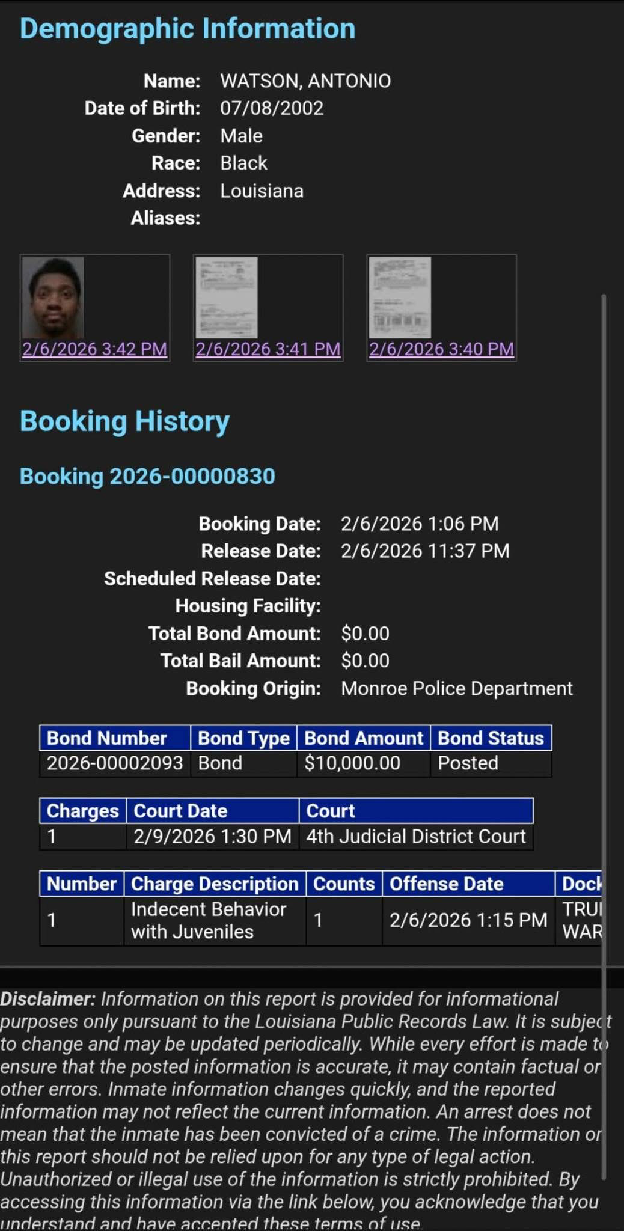
    A substitute teacher at Carver Elementary School was arrested and charged with indecent behavior with juveniles, according to public arrest records. The charge is an allegation, and the case is pending in court.

    The incident is alleged to have occurred on February 4, 2026. A family of one affected student says they were not notified immediately and only learned of the situation after their child disclosed it at home. To protect the child, no identifying information is being released, including gender or grade level.

    One family member briefly made a public post out of concern that other children may have been involved or exposed, noting that multiple students were present in the classroom at the time. The post was later removed after the family became worried that public discussion could further harm or identify the child. The child shared graphic details with their families about the occurrence — and how one child stated they felt trapped under the desk while the act was performed. The family says their intent was never public exposure, but to raise concern that some children may be afraid to speak up, especially if parents were never informed or asked to talk with their children.

    Shortly after that post, the school issued a brief public statement acknowledging that an allegation had been reported and referred to law enforcement, stating that the matter was under investigation and that no further comments could be made at that time. According to the family, that statement is the primary communication they have received.

    According to the family, they attempted to file a police report themselves but say they were unable to do so initially because they were not provided with key information, including the name of the substitute teacher involved. The family says they requested this information from the school and were denied access at the time, leaving them unable to complete a report without identifying details. They are now seeking clarity on why that information was not made available to them sooner and whether this aligns with district policy when parents are attempting to report alleged criminal conduct involving their child.

    One family reports the child is now experiencing severe anxiety and trauma-related symptoms and says no counseling or support services have been offered unless the family requested it. They are asking why parents of children who were present were not notified directly, whether additional students may have been affected, and what protocols exist to support children in situations involving alleged sexual misconduct.

    Because the school has publicly stated that no further comment is available, they are not currently providing additional statements. This remains an ongoing story. I am working closely with the family privately to advocate for them while prioritizing the child’s safety and well-being, and I will share updates as information can be responsibly confirmed.

    TLDR:
    A substitute teacher was arrested and charged with indecent behavior with juveniles. A family says they were not promptly notified, fears other children may have been affected, and worries some may be afraid to speak up because parents were not informed. The school issued a brief statement and says no further comment is available. This is an ongoing investigation.

    CAN Report Image
    CAN Report Image

  • Industrial Groundwork in Ouachita Parish?

    OPPJ — Public Records Review

    Over the past few weeks, I’ve been digging through Ouachita Parish public records. Looking at budgets, meeting minutes, audit reports, and capital outlay documents. I’m trying to better understand how parish tax dollars are being spent and what long-term plans may be underway.

    One pattern that stands out in the records is the parish’s repeated use of two categories: East Ouachita Economic Development Capital Outlay and West Ouachita Economic Development Capital Outlay. These funds appear throughout the financial documents and meeting minutes and are specifically tied to economic development spending.

    In plain terms, “capital outlay” usually refers to money used for large projects such as infrastructure, engineering work, planning, and development preparation. It is different from routine expenses like payroll or daily operations. Capital outlay funds are typically used when a government is investing in long-term projects.

    The documents show the parish approving funding connected to planning, engineering work, and infrastructure improvements under these economic development categories. While the records do not name a specific company or project, these types of expenditures are often associated with early-stage development planning.

    Another detail that appears consistently in the records is the geographic separation of spending between East Ouachita and West Ouachita. That type of distinction can sometimes indicate that development planning is being focused in particular areas of the parish rather than applied evenly everywhere.

    In many communities, the early phases of industrial or large-scale economic development follow a fairly predictable pattern:

    1. Engineering or feasibility studies are approved
    2. Infrastructure planning begins (roads, utilities, site preparation)
    3. Capital outlay funds are allocated
    4. Sites are prepared or certified for development
    5. A company announcement may happen later

    The documents reviewed so far appear to show activity that fits within the early stages of that process. However, the records themselves do not identify a specific industry, company, or project.

    Another interesting piece of the puzzle is that some of the investments appear tied to infrastructure and development planning that could support large projects requiring significant utilities, broadband access, or transportation access. Those types of investments are often made years before any official announcement is made.

    To be clear, this does not mean a specific industrial project or company has been confirmed. What the documents show is that the parish has been allocating funds and approving planning activity tied to economic development infrastructure.

    At this stage of the investigation, the goal is simply to understand what these funds are being used for and what long-term development plans may exist.

    I am still requesting types of documents that often provide more detail about whether a parish is preparing land for future industry or large employers.

    As always, I want to be clear that I am not an attorney and not claiming wrongdoing. My goal is simply to review public records and help make complex government documents easier for the community to understand.

    Public information helps everyone better understand how our local government is planning for the future. We deserve to be informed. As I look through the OPPJ meeting minutes, I haven’t found any public information on plans for industrial development but in my opinion, the financial records seem to indicate that is the direction they are heading. I wonder at what point a public announcement would be made?

  • Where Did the COVID Relief Money Go?

    OPPJ — ARPA Spending Review

    I’m not an attorney or an accountant. I’m simply a citizen reviewing public records and trying to understand how public funds are being used.

    One of the biggest questions that came up during this review is this: How was the federal COVID relief money actually spent in our parish?

    What ARPA Funds Are

    During the COVID-19 pandemic, the federal government passed the American Rescue Plan Act (ARPA). This program sent millions of dollars to local governments, including Ouachita Parish. These funds were intended to help communities recover from the pandemic through things like:
    – Public health responses
    – Economic recovery
    – Infrastructure improvements
    – Assistance to nonprofits and community organizations
    – Replacing lost government revenue

    Because this was federal taxpayer money, it’s important that the public understands where it went and what it was used for.

    What the Records Show

    After reviewing the ARPA reports and spending records, the funds appear to have been distributed across several different areas. Examples include funding for:
    – Infrastructure and capital projects
    – Workforce development initiatives
    – Nonprofit and community programs
    – Economic development efforts
    – Administrative and professional services

    Some funding was directed toward organizations and community programs, while other funds went toward planning, infrastructure improvements, and regional development projects. Many of these uses fall within categories that were permitted under federal ARPA guidelines.

    However, one thing becomes clear when reviewing the records: the spending is spread across many different departments and reports.

    Why That Matters

    Because ARPA money was distributed across multiple programs and funds, it becomes difficult for the public to quickly answer a simple question: How much money went to each project, and what outcomes did it produce?

    Instead of one simple list, the information appears across:
    – Multiple departments
    – Multiple projects
    – Multiple financial reports
    – Multiple funds

    That means it takes significant time digging through records to piece together the full picture.

    Questions Worth Asking

    Based on the documents reviewed so far, there are a few questions that naturally follow:
    – How were projects selected for ARPA funding?
    – How much of the allocated money has actually been spent?
    – What measurable results are tied to these projects?
    – Were these spending decisions clearly discussed in public meetings?

    These aren’t accusations. They’re simply the kinds of questions communities ask when millions of taxpayer dollars are involved.

    Why Transparency Matters

    Federal COVID relief funds were meant to help communities recover from a historic crisis. Because of that, the public deserves to understand:
    – Where the money went
    – How the decisions were made
    – What benefits the community received

    Public records exist for exactly this reason. As I continue reviewing documents, I’ll continue sharing what I find so the community can better understand how these funds were used.

  • OPPJ Financial Review — Part 3

    Disclaimer: I am not an attorney or a CPA. This post is based on publicly available documents and audit reports. If something is incorrect, I welcome clarification.

    These are coming out as I get responses on my public record requests. I have my own suspicions and will tie it together at the end in an opinion piece. But for now, I’m laying the groundwork of what is documented.

    Over the past few weeks, I’ve been reviewing:
    – The 2024 Independent Audit
    – Financial records obtained through public records requests
    – ARPA (COVID relief) spending
    – Capital project fund summaries

    Here’s what stands out so far.

    1. The 2024 Audit Was Filed Late

    The audit itself says it was not submitted within the required deadline. In my opinion, late audits can point to administrative or internal control problems.

    2. Part of the Financial Picture Was Missing

    The auditors gave a clean opinion on the main government finances. However, they issued an adverse opinion on certain “component units” because those entities were not included in the financial statements.

    In simple terms: some legally separate entities connected to OPPJ were not included in the report. That affects transparency — not necessarily legality — but it limits the full picture.

    3. ARPA Reporting Was Off by $382,277

    The audit states that ARPA (federal COVID funds) reporting to the U.S. Treasury understated expenditures by $382,277. That does NOT automatically mean money was stolen. It means the reporting to the federal government was inaccurate and needed correction. That’s something that should be reconciled carefully.

    4. A $697,776 Accounting Correction Was Made

    The audit shows a prior-year correction involving $697,776 that had been classified incorrectly. This confirms that financial misclassifications have happened.

    5. There Is Ongoing Litigation Exposure

    The audit notes at least one lawsuit where potential liability could range from $1 million to $3 million if the outcome is unfavorable. That matters when evaluating legal spending and risk management.

  • What’s Going On Between the Judges and OPPJ — Part 2

    Deep Dive into OPPJ

    Disclaimer: I’m not an attorney. This is just my understanding based on public documents.

    • All of the sitting judges in the 4th Judicial District Court are listed as plaintiffs in a separate lawsuit against the Ouachita Parish Police Jury (OPPJ).
    • Because of that lawsuit, they stepped aside (recused themselves) from the Frost Tower case to avoid any appearance of conflict.
    • Court revenue from fines and fees has gone down in recent years.
    • The judges asked OPPJ for more funding to help cover expenses.
    • OPPJ increased funding for the judges from about $118,000 in 2022 to $525,000 in 2023.
    • Budget documents also show the Parish’s General Fund is under increasing financial pressure.

    To better understand the financial side, I’ve submitted a public records request asking for:
    – Payments made to outside lawyers (2023 to now)
    – Contracts and invoices for those legal services
    – Budget line items for legal expenses

    This isn’t about picking sides. It’s about understanding what’s happening and how taxpayer dollars are being used.

    I’ll continue sharing updates as documents come in — and I’ll stick to what can be proven.